


AgentBoca · Informed Ownership
Homeowners insurance generally excludes rising floodwater. Understand Boca Raton flood zones, NFIP limits, private coverage and the questions to ask before buying.
Jennifer Susanne Sommers, Global Real Estate Advisor, ONE Sotheby's International Realty, Boca Raton and Delray Beach.
October 28, 2026
Flood insurance is worth evaluating even when your lender does not require it. A homeowners policy may cover wind damage, subject to its terms and deductibles, but generally excludes flooding from outside the home. Flood insurance is a second policy. On many Boca houses, the federal version is not large enough to rebuild what you just bought.
South Florida’s autumn king tides are a reminder that coastal flooding can occur without a hurricane. Wind and unusually high tides can affect low-lying streets and waterfront properties. A sunny listing photograph and a high tide can show the same street on very different days.
Three kinds of water, and only one policy for each
Buyers lump them together. The policies do not.
Wind is a hurricane, a tropical storm, or a hard afternoon squall. A fallen tree, a lifted roof, and rain entering a wind-damaged roof may be covered, depending on the policy and cause of loss. A hurricane deductible applies when its policy trigger is met; other deductibles may apply to other storms. That deductible is often a percentage of the insured value, not a flat $1,000. On a luxury house it is a number you should see before you fall in love with the kitchen.
Flood is generally rising surface water. NFIP coverage requires the policy’s definition of flood to be met, including its area-or-properties threshold. A storm surge, a canal that overtops, a seawall that is overtopped, a king tide that crosses the lawn and enters the house. Standard homeowners coverage generally excludes those flood losses. Without separate flood coverage, an owner can face a substantial uninsured loss.
A slow leak from a pipe, or a water heater that fails, is a different conversation again. It is not flood, and it is not the reason to skip flood coverage. I am not the person who binds any of these. A Florida insurance broker, quoting the actual address, is.
The letter on the map
“I’m not in a flood zone” is the sentence that costs people money. Every lot is in a zone. The designation helps establish lender requirements and mapped risk. Premiums also depend on the individual property, elevation, replacement cost and other factors.
Zone X is lower risk. A lender often does not require flood insurance there. Zone AE is the high-risk zone buyers in Boca see most often. FEMA treats it as the area with a 1 percent chance of flooding in a given year, which is what people still call the hundred-year flood. The odds are not once a century. They are one in a hundred, every year, and the events do not wait their turn. In AE, a federally related mortgage almost always requires flood insurance, and elevation is one of several factors the insurer considers.
Zone VE is the coastal high-hazard zone, the one with wave action. Do not infer the designation from proximity to the ocean, Intracoastal or a canal. Two houses on the same street can carry different letters. The listing remarks are not the map.
Palm Beach County’s current flood maps took effect on December 20, 2024. A survey or flood determination from 2019 may not reflect the current map. Ask for the zone on the current map, for that building, not for the neighborhood. Part of a lot can sit in a high-risk zone while the house itself does not. The house is the question.
East of I-95, do not treat Zone X as a free pass. Streets in the coastal zip codes have taken water in storms even where an older map looked calm. A king tide does not read the map before it crosses a low seawall.
What $250,000 does not rebuild
A National Flood Insurance Program policy caps residential building coverage at $250,000. That can be a serious policy on a modest house. It is a partial policy on a $3 million house, and it is a token on a $10 million house. The rest of the rebuild has to come from a private flood policy or an excess policy layered above the federal one.
Contents are separate from the building. NFIP policies do not cover additional living expenses—the cost of living somewhere else while work is done. Private policies are not automatically better. Some cost less in Zone X. Some will not write a house once a storm is named. The only useful comparison is two quotes, line by line, on the same address: what is covered, what the deductible is, whether contents and living expenses are included, and how long you wait before coverage begins.
On a new federal policy, that wait is generally 30 days, with exceptions including certain mortgage-related purchases. Binding it the week a storm is in the Gulf does not protect the closing. Buyers who are serious about a waterfront house get the quote during the inspection period, not the week they receive the keys.
The city discount, and who it leaves out
Boca Raton participates in FEMA’s Community Rating System. The discount on eligible federal flood policies for homes inside the city has been reported at 25 percent, up from 15 percent. The city told owners to ask their own flood carrier when the credit would appear on the bill.
A Boca mailing address is not the test. The discount follows the city limits. Boca West has a Boca Raton address and sits in unincorporated Palm Beach County. It does not receive the City of Boca Raton’s credit merely because the address says Boca; a county program may apply instead. Assume nothing from the zip code. Ask the carrier to confirm the parcel.
If the house is on the water, the policy is the third question
The first is whether your boat can leave. Fixed bridges between a canal dock and the Intracoastal are the usual surprise. The Intracoastal itself is not the problem. The side canal is. Ask for the lowest clearance, and for the depth at the dock at low tide. A deep-water listing and a boat that cannot make the trip are a poor match. I keep a separate note on Boca Raton waterfront homes for that part of the search.
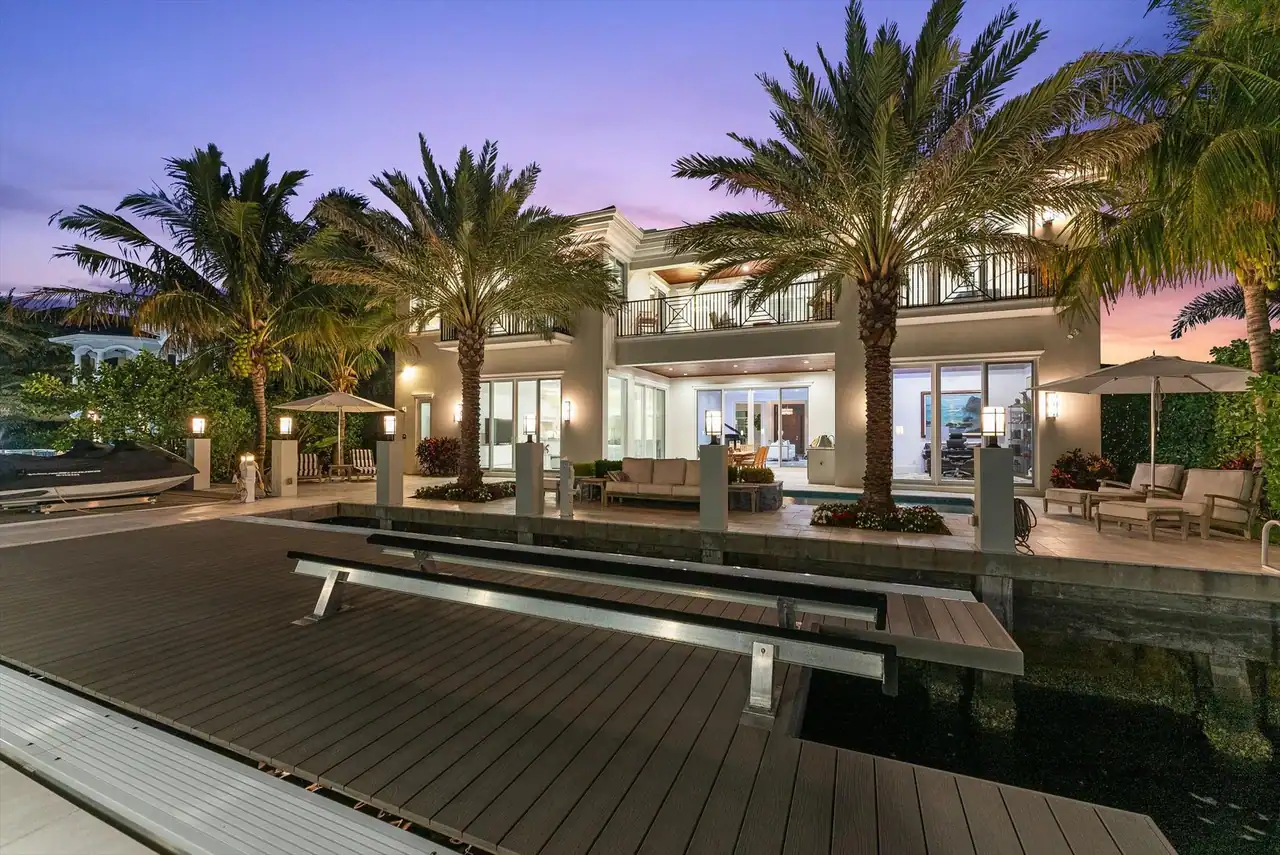
The second question is the seawall. A tired wall is not a cosmetic item. Replacement on a real length of waterfront is often a five- or six-figure project, and it is not included because the house is expensive. Have a marine contractor look at it, and pull the permit history, before you waive the inspection. The same visit should cover the dock, the lifts, and the electric and water service on the pier.
The third question is elevation. Ask for an elevation certificate. It tells the insurer where the finished floor sits against the base flood elevation, and helps document the elevation information relevant to insurance and floodplain review. A future rebuild must meet the requirements in force at that time. An older certificate, written to a retired map, is a start. It is not the finish. The December 2024 maps are the ones that count.
A second home is underwritten differently
Tell the broker the truth about how the house will be used. A primary residence, a winter house that sits empty from May to October, and a house you will lend to guests are not the same risk. Policies ask how long the house is unattended, who has a key, and whether a manager walks it. Homestead, which I cover in the tax note, is a separate issue. You can insure a second home properly and still not be eligible for a homestead exemption. Do not let one approval talk you into the other.
What I want in the file before an offer
The current FEMA zone for the building, and the map panel.
An elevation certificate, or an order for one.
Whether the lender will require flood coverage.
A wind quote and a flood quote, including private coverage above $250,000 if the rebuild would cost more than that.
The hurricane deductible in dollars, not only as a percentage.
Roof age, impact openings, and any wind-mitigation credit.
Prior flood claims, from the seller’s disclosure and from the broker’s loss history.
A seawall and dock inspection if the house touches the water.
What the purchase price tends to buy, once you are past the insurance, is here: $3 million, $5 million, and $10 million in Boca Raton.
Questions I am asked
Does homeowners insurance cover flood damage from a hurricane? No. Wind is the homeowners policy. Rising water is a flood policy. Water that entered because the wind opened the roof is a different claim from water that rose out of the canal.
Do I need flood insurance in Zone X? A lender often will not require it. Consider a quote even outside a high-risk area. Compare the actual premium and coverage for the address with your insurance professional.
Is $250,000 enough? Only if $250,000 would rebuild the house. On a luxury house it will not. Quote private or excess coverage for the difference, and ask whether contents and living expenses are included.
Does every Boca address get the city’s flood discount? No. Eligible federal policies inside the city limits. Boca West is the example that does not qualify just because the mail says Boca. Confirm the parcel with the carrier.
Can I buy the policy the day before a storm? Do not plan on it. A new federal policy generally has a 30-day waiting period, with exceptions. Private insurers may restrict new coverage when a storm threatens. Confirm the effective date before relying on coverage.
Plan the purchase. Understand the ownership.
Jennifer Susanne Sommers, Global Real Estate Advisor, ONE Sotheby's International Realty, Boca Raton and Delray Beach.
561-888-3115 · Request a personal consultation
Read the companion guide: The Tax Bill on a Boca Listing Is Not Your Tax Bill
Source review: FEMA’s National Flood Insurance Program coverage and waiting-period guidance; Florida Department of Financial Services flood-insurance guidance; City of Boca Raton floodplain-management and current flood-map information. General information, not insurance advice. Coverage, exclusions, eligibility, waiting periods and premiums must be confirmed for the exact address with a licensed insurance professional. Reviewed October 28, 2026.

Connect